Plantar Fasciitis Question

Reader Mark writes “I had no idea that plantar fasciitis and achilles tendonitis were related. I’ve also been told that rolling your foot on a tennis ball while seated is good for stretching the plantar fascia. Is this a good idea, or is it doing damage? I’ve found it really relieves the pain for a while. Also I am wondering if shoes that are too loose or tight might be a factor.”

Mark asks great questions and ones I get every day. First lets talk about rolling your arch over a tennis ball…I’m not a fan. I know that many physical therapists and other sports medicine specialists will recommend this but in my experience agressive stretching of the plantar fascia can lead to tearing or even rupture of the plantar fascia. Athletes in general do things in a big way and stretching with a tennis ball is no different. In this case, experiencing a stretch so good it hurts, can actually be doing harm. Better off to make an appointment with your local sports medicine podiatrist for evaluation and treatment.

In general, shoes that are too loose are worse than too tight and shoes that are too short are worse than too long. The more loose your shoe, the more your foot will pronate which can cause plantar fasciitis. If your shoe is too is too short, particularly heel-to-ball, your plantar fascia won’t be properly supported as this image shows.

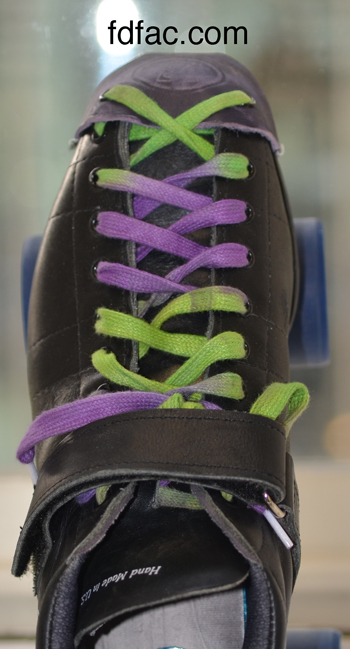
Lacing for Heel Slippage, Top of the Foot Bump and Bunions

Modified shoe lacing can help with a variety of shoe fit problems. Today’s video tutorial shows you how to do this for the following problems:
1. Heel slippage
2. Bumps on top of the foot
3. Bunions or a wide forefoot

Here are my related posts on top of the foot bumps https://drshoe.wordpress.com/2008/02/03/top-of-the-foot-bump/, https://drshoe.wordpress.com/2008/07/24/top-of-the-foot-bump-part-2/

Shoe Review – Brooks Addiction 10 vs. 9

Today’s video compares Addiction 9 to Addiction 10 and highlights the changes to 10 which may make a difference for you. Overall however, Addiction 10 fits similar to Addition 9 and still is a great shoe for the shallow, pronated foot.

Determining Proper Shoe Fit – Width and Depth

In order to achieve proper shoe fit, it’s important to take into account volume. Volume = length x width x depth and when choosing a shoe you should try to match the volume of your shoe to the volume of your foot. I previously blogged about length using the Brannock Device which is the first component of volume. The following video shows you how to evaluate width and depth, the final components of volume.

Athletic shoe companies never talk about the upper or depth of a shoe. Instead they categorize shoes according to the lower (midsole) using terms like motion control, neutral or cushioning. Approaching shoe fit in this way only tells half the story and when you don’t take into account overall volume shoe fit and performance are compromised.

Shoe Review – Brooks Ariel

Brooks Ariel is a great shoe for the excessive pronator who also has a wide, deep foot. Brooks has kept the shoe the same for the past several years which is great for those women who rely on this shoe for serious support. Here is my latest video on Brooks Ariel. Additional posts follow the video.

https://drshoe.wordpress.com/2009/09/09/brooks-introduces-new-colors-beast-and-ariel/

https://drshoe.wordpress.com/2008/11/05/shoe-review-brooks-ariel-old-vs-new/

Roller Derby – Custom Shoe Laces

Many thanks to Admiral DeJenerate of Undead Bettys Roller Derby for sharing the information on where she got her groovy hand dyed, custom skate laces.

Admiral DeJenerate has scoured the internet to make sure her own unique brand of mayhem is on proud display for all to see, starting with these hip laces. She has graciously allowed me to provide the purveyors link on Etsy.com and they are a steal at less than $10. If you decide to have a pair made – tell them Admiral DeJenerate made it all possible.

Determing Proper Shoe Size – Brannock Device

Proper foot measuring is important and not understanding how to do this can mean the difference between comfort and pain. Many people have seen a Brannock Device, but few know how to use it correctly. This video teaches you how make sure your shoe salesperson is doing it right. 80% of my patients measure longer heel-to-ball than heel-to-toe. If you also measure longer heel-to-ball then using one finger beyond the longest toe method will not work for you and your shoe will not fit as well as it should.

Here are my previous posts on measuring feet which together with the video should give you a comprehensive overview on how to properly measure your feet.

https://drshoe.wordpress.com/2007/12/05/size-matters-heel-to-ball-vs-heel-to-toe/

https://drshoe.wordpress.com/2008/05/12/mens-vs-womens-shoe-sizes-brannock-device/

Sizing Superfeet – Easy How To

Superfeet are my favorite non-custom insoles. They come in a wide variety of styles for many different shoes. What most people don’t realize is that even though Superfeet are pre-sized A,B,C,D etc. your foot may not fall exactly within the corresponding numbered size. This video shows you how to properly size Superfeet so that you get optimum support. My other posts about Superfeet follow the video.

https://drshoe.wordpress.com/2007/12/18/hammertoes-full-length-insoles/


https://drshoe.wordpress.com/2008/07/29/spin-class-arch-pain/

https://drshoe.wordpress.com/2008/01/22/dress-shoe-orthotics/

Plantar Fasciitis & Achilles Tendonitis – Stretches Make A Difference

Wearing the wrong shoes can directly cause or contribute to plantar fasciitis and Achilles tendonitis. Especially shoes that are excessively worn https://drshoe.wordpress.com/2011/10/23/how-to-tell-when-your-athletic-shoes-are-worn-out/ or are the wrong size.

If you have already replaced your shoes, what else can you do? Achilles tendon stretches, that’s what. When the Achilles tendon is tight the foot compensates by pronating and pronation directly contributes to both Achilles tightness and plantar fasciitis.

Muscles attach tendons to bone and in this case, these two muscles join to form a common tendon, the Achilles. In this video, Whitney will show you how to stretch the Gastrocnemius and Soleus muscles. Performing these individual stretches daily in addition to wearing the right shoes, should get you back on track no time.

If the pain persists however, make an appointment with your nearest Sports Medicine Podiatrist for additional evaluation and treatment.

Everyday Athletes Are Champions

I am fortunate to have the best patients any physician could ever want. Everyday athletes doing extraordinary things. Critical to their accomplishments is the right diagnosis, the right treatment and the right shoes which Financial District Foot & Ankle Center prides itself on. These are but a few of the amazing athletes I have been privileged to treat during this past year. To them and to all of my other patients “Thank You”.

How To Tell When Your Athletic Shoes Are Worn Out

At least once a day, I’m asked “how do I know when my athletic shoes are worn out?”. If you go to a running shoe store, you will be told a pair of running shoes will last 300-500 miles. This is a terrible recommendation. What if you only work out at the gym on the Elliptical Machine or StairMaster? How long will your shoes last then? What if you walk or hike and don’t run at all?

A better way to determine wear is to check your own shoes – regularly. Below is a video I created which takes you step by step through the process of evaluating athletic shoes for excessive wear. Learning how to do this will save, time, money and potential injury.

Shoe Review – Brooks Trance 10 vs.9

I prefer the new Brooks Trance version 10 over version 9. Trance 10 is more stable and slightly wider than version 9. Additional reasons are outlined in my latest Shoe Review video.

Shoe Review – Saucony ProGrid Guide 4 vs. 3

In general, I’m a huge fan of Saucony ProGrid Guide and version 4 is even better than version 3. My only caution is width. Guide 4 is slightly narrower than Guide 3 which this video shows.

Shoe Review – Brooks Ravenna 2

Brooks Ravenna 2 is a great shoe which might otherwise be overlooked due to it’s soft heel counter. Podiatrist in general recommend firm, non-collapsible heel counters which Brooks Ravenna 2 doesn’t have. What it does have however is a longer, firm rubber, heel outsole than most running shoes which provides significant midfoot support.

Zappos.com Tutorial

I have been using Zappos.com for several years now and I recommend all of my patients use this site when shoe shopping. The interface is intuitive and easy to navigate and you can’t beat the free shipping option.

This video highlights a few of the features I especially like.

Shoe Review – Saucony ProGrid Guide 4

Saucony ProGrid Guide 4 is one of my favorite shoes. The upper has a generous amount of mesh which improves airflow, lightness and comfort. Mesh is also helpful if you have bunions or hammertoes.

The rearfoot midsole is thick providing maximum cushioning at heel strike and the firm medial EVA (grey) helps resist pronation and improves stability.

The width is not too narrow and not too wide. This image compares Asics 2160 to Saucony ProGrid Guide 4. Notice how the Guide 4 outsole is slightly wider in the forefoot than the 2160? This is a great feature as most feet are slightly wider in the forefoot than rearfoot.

All in all, Saucony ProGrid Guide 4 is a great shoe and I also like the new bright colors.

Shoe Review – ProGrid Stabil CS vs. ProGrid Stabil CS 2

When Saucony changed the Grid Stabil design to ProGrid Stabil CS, I was underwhelmed as the ProGrid Stabil CS whas not nearly as stable or supportive as the the Grid Stabil https://drshoe.wordpress.com/2009/02/04/shoe-review-saucony-grid-stabil-vs-progrid-stabil/. Fortunately, the ProGrid Stabil CS 2 has reinstated the features I was so fond of with the earlier Grid Stabil. These include:

A less deep toebox for better fit, while still retaining ample upper width for toes or orthotics if necessary.

The ProGrid Stabil 2 midsole is thicker and firmer than the prior version which makes for a much more structured, stable shoe.

The most important change with ProGrid Stabil CS 2 is a firmer, more durable outsole. The prior version’s outsole was thinner and softer, causing the shoe to wear out more quickly than it should. It was also not not very effective at pronation control whereas the CS 2 is.

If you’re a runner with a wide foot looking for lightweight support, then Grid Stabil CS might just be for you.

Shoe Review – Nike Air Structure Triax 12 vs 13

I’ve been a fan of Nike Air Structure Triax for quite sometime, however there are some changes with version 13 that you should be aware of if you’re upgrading from version 12.

First and foremost the Triax 13 is almost a full size shorter, heel-to-ball, than the Triax 12 https://drshoe.wordpress.com/2007/12/05/size-matters-heel-to-ball-vs-heel-to-toe/.This can cause conditions like plantar fasciitis (arch pain) or metatarsalgia (ball of the foot pain) so make sure to check the size before you buy.

Lack of firm EVA caps (blue highlighted areas) on the Triax 13 waffle sole also means less durability than the Triax 12. This means you may not get as much mileage as you would in the 12. If you owm the Triax 13 you will want to check outsole wear sooner than with the Triax 12.

Pluses about Nike’s Air Structure Triax 13 include a firm heel counter and firm EVA in the medial midsole. These features continue to make the Triax one of Nike’s most stable, supportive shoes.

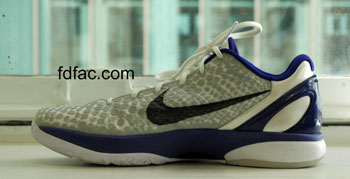
Shoe Review – Nike Zoom Kobe VI Basketball

Basketball shoes can be a challenge because they typically don’t come in widths other than medium and tend to run wide, making it all but impossible to fit a narrow foot. Nike Zoom Kobe VI is an unexpected exception. In addition to a narrower last than most basketball shoes, it’s also extremely stable.

Another plus is the insole waist of the Kobe VI doesn’t hourglass providing a more supportive foundation for a pronated foot.

With an inflexible forefoot sole, torsional stability and a firm heel counter, this court shoe rivals some of the most stable running shoes available, which truly is an exception to the rule.

My only minor reservation with this shoe is that it’s a mid-top style and not a “true” high-top which may exacerbate ankle instability. This is easily remedied however, by wearing an ankle brace during play. If you remove the sock liner, there will be more than enough room to accommodate any additional tightness an ankle brace or custom orthotic might cause.

Brooks Addiction 10 vs. Brooks Adrenaline 9

I have always recommended the Brooks Adrenaline for a narrow foot, but am pleased to announce that Brooks Addiction is also an option for a narrow foot. In fact, if you have a flat, narrow foot, Brooks Addiction is probably your best option.

Similar to the Adrenaline, the Addiction has lots of medial EVA which is great for heavy pronators.

It also doesn’t hourglass in at the waist which is good for flat feet.

Both models come in narrow widths – A width for women, B width for men. Overall, I am very pleased with the new Adrenaline as it fills a much needed void for the narrow foot category and at only 3 ounces heavier than the Adrenaline, the Addiction 9 is sure to please.