Shoe Review – Brooks Ariel Old vs. New

I have always been a fan of Brooks Ariel for the wide, deep foot. The shoe is torsionally stable with a stiff heel counter and an inflexible forefoot sole. Recently Brooks changed the model which may or may not be a good thing depending on your foot volume.

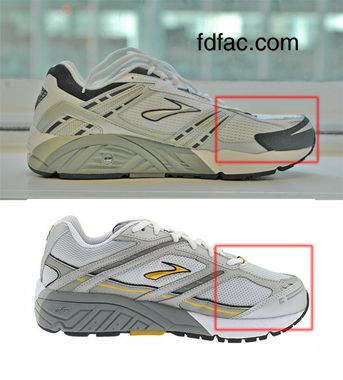
The first change is toebox depth. The old Ariel (left) is shallower than the new Ariel (right). If you have a deep foot than this will be great. It’ won’t be great however, if you’re wearing the old Ariel and it was already too deep in the toebox.

ariel_depth

The next change is overall length. The old Ariel is shorter, given the same size, than the new Ariel. This only applies to the toebox length, as the heel to ball measurements remain the same in both shoes. This will matter if your heel to ball is a 9 and your heel to toe measurement is a 7, because the extra toe box length may make the shoe uncomfortably long for you.

ariel_side1

The back of the shoe in the old Ariel is lower than the back of the shoe in the new Ariel. This change is generally a good thing, as the new Ariel will accommodate an orthotic as well as reduce heel slippage.

ariel_heel_counter_depth1

In summary, the new Ariel is deeper, wider and longer than the old Ariel. For many people who wear this shoe, the changes won’t matter. However, if you try them on and it seems you’re swimming in them, you might want to try the Brooks Addiction which is also deep but a bit narrower.
Shoe Review – North Face Fire Road

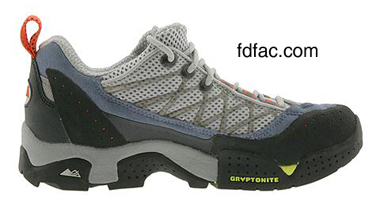
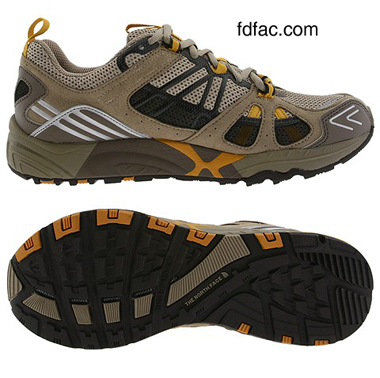
Hiking boots are notoriously wide and deep, which can be a huge challenge if you have a narrow foot. North Face Men’s Fire Road is one of the few hiking boots which are narrow and shallow. It’s also lightweight which is a plus, as Vasque hiking shoes, which are also narrow are a bit heavier. Comes in both men’s and women’s sizes.

northface_fireroad

Shoe Review – Adidas adiPURE TRX FG

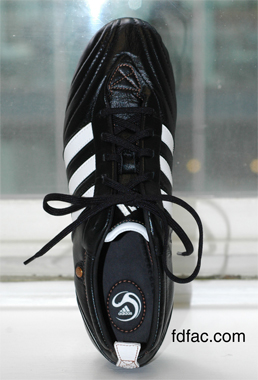
AR came in today with her new soccer cleats – Adidas adiPure. AR has a wide foot, so she wears men’s soccer cleats, which is a great idea for women who have trouble finding wide enough women’s cleats.

In addition to being wide, the adiPure is made with extremely soft leather which helps with fit. The shoe also has a removable sock liner which can accommodate an orthotic if you need it. Even though the width looks narrow based on the outsole, inside there is a wide insole which provides a great foundation for your foot, especially if it’s wide.

This shoe can be found on Zappos.com in both men’s and women’s sizes. http://www.zappos.com/n/p/p/7419865/c/148832.html

Hallux Limitus vs. Hallux Rigidus

Reader Mike writes“I was recently diagnosed with functional hallux limitus after developing a strong interest in hiking (and having never done any other long distance running, or walking type things before that) Do you have any recommendations for a good hiking boot/shoe? I’m currently using Montrail CTC.”

Hallux limitus is a condition whereby the big toe joint becomes restricted during weight bearing but is otherwise healthy, hence the name functional. In this condition you still have cartilage with little to no arthritis in the joint. Pain arises with excessive flexion of the great toe or while standing due to pronation and rolling onto the big toe joint, causing restricted motion.

In Hallux rigidus, the great toe joint becomes arthritic with associated cartilage loss, resulting in bone on bone motion which is very painful. This is a structural problem usually requiring surgery to correct.

In hallux rigidus, you want to stop motion, in hallux limitus you want to improve motion. For both conditions an inflexible or stiff soled shoe is usually best which fortunately most hiking boots have. I have several patients with hallux rigidus, who I have wear only hiking boots becuase this eliminates the pain. For my hallux limitus patients I can usually stop the pain by getting them into shoes that are primarily inflexible in the forefoot. Montrail CTC is a classic example of this. Custom orthotics can also help since they improve big toe joint function.

For even more information about hallux limitus read my other post https://drshoe.wordpress.com/2008/01/08/shoe-design-for-hallux-limitus-ie-turf-toe-non-bunion-pain/ which talks about sole design.

Shoe Review – Mizuno Wave Rider 11

In general, Mizuno shoes have great uppers and not so great, soft compressible EVA midsoles or lowers. Because of this, they tend to wear out more quickly then other shoes having more firm medial (inner) EVA outsoles.

CF brought in her Mizuno Wave Wrider 11 shoes in today for evaluation after she started having heel pain while training in them for the Nike Women’s 1/2 Marathon. The shoes were less than 3 months old and barely had 150 miles on them, when the pain started. Fortunately she purchased a new pair for the event and although the pain did not go away, it did not get worse after the Marathon .

The above image shows her 3 month old shoe on the left and her new shoe on the right. Notice how the left shoe is listing to the outside (lateral)? This is because the white EVA midsole has compressed, which tilts the shoe, holding the foot in less than optimal alignment.

The image above shows asymmetric wear in the old shoe with the right shoe outsole being entirely worn off (no pink tread), making the outer forefoot less durable and more likely to pronate, resulting in heel pain or plantar fasciitis.

In this case, even a relatively new shoe can cause foot pain and problems while running. If you wear Mizuno’s, especially the Wave Rider 11, you will want to evaluate your shoes for signs of excessive wear at least monthly.

Shoe Review – Aquatalia Wasabi Boot & Whoopie3 Loafer

If you have a narrow foot then I don’t have to tell you how frustrating it can be trying to find a pair of boots that fit. If you’re looking for a stylish, waterproof boot, then Aquatalia’s Wasabi knee high boot is not only fashionable but narrow and shallow as well. It has a great rubberized sole to help with shock absorption and will get you through even the wettest days.

Aquatalia also makes a patent leather loafer on the same last, with the same low volume upper and narrow outsole – Whoopie3 which is shown below.

Aquatalia’s website is http://www.aquatalia.com/ Check it out for new styles!

Great Shoe Site – 6pm.com

For those of you who love the ease of ordering from Zappos.com, you may want to check out their other site, http://www.6pm.com/ which features the same multi-view shoes as Zappos.com, only at deeply discounted prices. The shipping policy is not as liberal (free outbound only with orders over $100) and their return policy is shorter (30 days as opposed to 365), but given the deals to be had, this site is well worth it.

Difficulty Fitting Orthotics Into Shoes

JLC writes I have very high arches and just bought my first custom orthotics but have not yet found a pair of shoes that work with them.”

Finding shoes to accommodate an orthotic can be a challenge. If you are ordering orthotics, be sure to show your podiatrist the shoes you plan on wearing them in, so that an appropriate pair can be made. If you’re primarily wearing flats and your orthotics are made for tennis shoes, they generally won’t work in your flats.

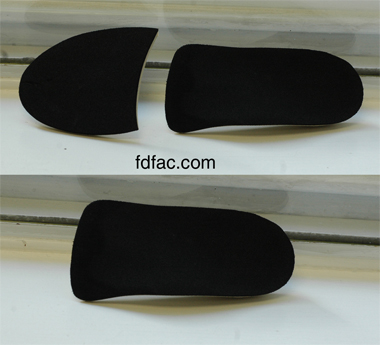
On the other hand, if you already have orthotics the profile may be able to be reduced, i.e. narrowing and/or removing length. A 3/4 length orthotic works just as good as full length orthotic, so shortening can usually help. The below images illustrate this principle.

Unfortunately, most non-athletic shoes will not accommodate an orthotic. Typically orthotics are too bulky unless your podiatrist orders a “dress shoe” or lower profile pair. This type of device is illustrated below. If you never wear athletic shoes, then this is the type you should have for your shoes. This style of device is sometimes called a cobra based on the design shape.

An orthotic made for a pair of flats or dress shoes will never be as good as a pair for athletic shoes, so if you can it is always best to have both pairs. Generally the 2nd pair is not as expensive as the first which helps.


Squeaky Orthotics – Part 2

I addressed squeaky orthotics in a prior post https://drshoe.wordpress.com/2007/12/27/squeeky-orthotics/ which illustrates how to apply tape on the underside of an orthotic to stop squeak.

Reader Sarah read this and asks “I have tried this many times, and the tape always comes off. Hockey tape gets all gooey and comes off in a lump, as well as leaving your shoe quite sticky. Masking tape just wears off. What tape works well?”

When tape works to eliminate squeak but won’t stay put, the best thing to do is have your podiatrist permanently glue a piece of leather or vinyl to the underside of the orthotic in the same place where the tape was. Typically Barge (shoemakers waterproof glue) is used. If your podiatrist doesn’t have the necessary materials then your local shoe repair store will. 


Shoe Review – Brooks Addiction 7 vs. 8

The Brooks Addiction is similar to the Beast in that it is wide, deep and very stable which is good for heavy pronators. Recently the Addiction 8 was released and it is a significantly different shoe than the Addiction 7.

Toebox Length and Depth – Substantially longer toebox in the Addiction 8 vs. the 7. This may be good or bad depending on whether your heel to ball or heel to toe measurement is longer https://drshoe.wordpress.com/2007/12/05/size-matters-heel-to-ball-vs-heel-to-toe/ The toebox depth in the Addiction 7 is much deeper than in the 8, or put differently, the 7 has more overall volume than the 8.

Width and Outsole Shape – The Addiction 8 is much narrower and has a much straighter last than the Addiction 7. If you have been successfully wearing the 7 you may need to go wider in the 8.

Overall, I’m pleased with the changes and much prefer version 8. It is more streamlined and proportional to the average foot than then 7. If however you have short toes, then you may want to try the Brooks Dyad, which has a shorter toebox than the newer Addiction 8.

For my review of Addiction 9 see the following post https://drshoe.wordpress.com/2010/08/03/shoe-review-brooks-addiction-8-vs-9/

Narrow, Shallow Clogs – Sven Clogs

Physician and reader Eva asks “I have worn Danskos for years since residency, but have never been satisfied with them. I have a very shallow foot (but regular width) and have nearly sprained my ankles multiple times from the excessively loose fit. Can you recommend any brands that make a more snug-fitting clog for shallow feet?”

As Eva points out, clogs are a great shoe choice for people who stand on their feet all day. Only problem is, most clogs are too wide or deep for many people’s feet. It doesn’t matter whether your foot is shallow or narrow or both, you still need a lower volume clog than the typical ones sold.

If this is a problem you’re having you can always try the narrow Dansko clogs, which are much more shallow than the regular ones. Another choice are Sven clogs http://svensclogs.com/index.html, which beat Dansko hands down for a narrow and shallow fit. Even better, with Sven clogs, you can customize the fit and look including base, color of leather and upper.


Footbed Design

A lot of people aren’t aware that the footbed of a shoe can go a long way to impart stability or cushioning. If your shoe has a removable sock liner, the footbed is the structure below the sock liner.

Typically there are 3 main types of footbeds.

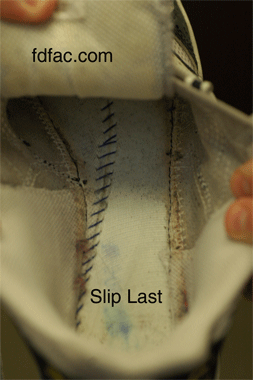
1. Slip lasted – No additional stiffener added to shoe. Identified by a stitched seam either around the sides or down the middle of the insole. This method allows for the most cushioning and flexibility.

2. Strobel lasted – Same as above with a thin, soft full length insole. This allows for a more stable (anti-pronation) shoe.

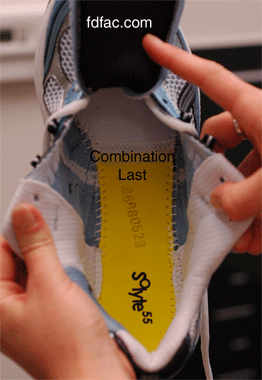
3. Combination lasted – A 1/2 and 1/2 mixture of the above. Forefoot – slip lasted, heel area – Strobel or (card) board lasted. This provides rearfoot stability with a cushioned forefoot.

When considering the overall structure, the footbed is only one component of stability, you also need to take into account the outsole composition. You can have a firm footbed and a soft midsole and the shoe will overall be soft. Conversely, you can have a soft footbed and a firm midsole and the shoe will overall be firm.

The goal is to start getting you familiar with shoe construction, so that you will eventually be able to match the construction to your particular foot.

Motion Control Shoes and Orthotics

Reader Rick asks “If I have flat feet, should I wear an orthotic, or wear a motion control running shoe? Or, can I have both or will this cause too much stability and actually make me a supinator?”

It all depends on whether or not you are having problems. If your foot is just flat, than a motion control or certainly a wider outsole shoe would be recommended for you. Motion control shoes usually have a firm heel counter (non-collapsible) a stiff footbed below the sock liner and a firm EVA midsole, which are all designed to prevent excessive pronation (foot collapse inward).

What a motion control shoe may or may not have is a stable upper, which is also necessary for proper support and pronation control. If your podiatrist determines you need an orthotic (excessive pronation), a motion control shoe can help, but you will still need the orthotic.

Don’t worry about the shoe and the orthotic causing supination (turning outward) as the combination won’t have that effect. Worst case scenario, you will have more control than you need, but this shouldn’t be a problem.

Shoe of The Month – Circa Joan & David

SF brought in this fabulous shoe today. A cross between a gladiator sandal upper and the classic T-strap, make this shoe the one to beat for keeping your foot from sliding forward.

The outside strap is also adjustable ensuring snug fit at the ankle. Although you may not be able to find this exact shoe, these features can be found on many heels, and would be worth looking for.

Cycling Shoes – Bunions

If you have a bunion, finding a cycling shoe that’s wide enough can be a challenge, especially if the rest of your foot isn’t wide. One solution is to find a shoe with mesh over the bunion which will be more forgiving than leather or vinyl trim. The image below shows an older model Pearl Izumi shoe which had trim over the bunion, making the shoe too tight.

In this case, the simple solution was cutting away the trim in the area of the bunion, to expose the mesh. This allows for expansion of the forefoot without compromising the rest of the shoe fit.

Shoe Review – Nike Air Equalon +2

Nike Air Equalon +2 is a great shoe if you have bunions. Notice the mesh over the widest part of the foot? It also has a firm heel counter and firm EVA for stability. It’s shallow, but not narrow, so if you have a narrow foot, this shoe may not work for you. For everyone else, it’s a great shoe.

Runners Toenails

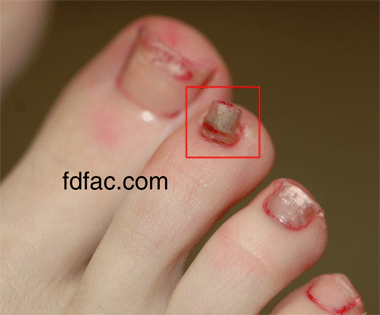
Many people have a long 2nd toe. In runners, a long 2nd toe can cause repetitive trauma to the toenail, resulting in a thick, protruding toenail This happens especially when running down hills.

If you are a runner and your toenail looks thick like this, you will only make matters worse if you ignore it. Thick nails always have to be treated, otherwise your nails will become permanently deformed.

If your nails are thick, go straight to your nearest podiatrist and have them thinned. The procedure is painless and will make all the difference in appearance and comfort. Oh, and just in case you were wondering, the red in the above image is residual polish, not blood. The white appearing adjacent toenails have a surface type of fungus, primarily due to polish, and easily filed off.

Shoe Review – Nike Air Max Assail Trail

Finding a trail shoe for a narrow foot is not an easy task. The Nike Air Max Assail Trail fits the bill even though it’s listed as a D-Medium width and not narrow. An added plus is torsionally stability (no side-to-side twist) and an inflexible, thick, shock absorptive sole. This can help alleviate ball of the foot pain. It will also accommodate an orthotic which is great.

Shoe Review – Saucony ProGrid Hurricane 9 vs. 10

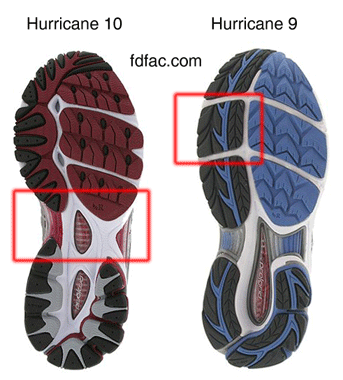
Here’s another example of a version change. As you can see below the Hurricane 10 is much shallower or as I prefer to describe it more fitted than the 9.

It’s also got a more proportional toe box, so if your heel to ball is sized 8 and your heel to toe is sized 8, your foot will fit nicely in this shoe. On the other hand if your heel to ball is an 8 and your heel to toe is a 7, you’ll do better in the Hurricane 9 as the Hurricane 10 may have too much toe box room.

Now let’s look at the width.

The Hurricane 10 is slightly more tapered on the inside which is good if you have a narrow foot. On the other hand, the Hurricane 9 is much boxier over the instep and arch, typically better for a wider foot.

Also notice the flex grooves. The Hurricane 9 is going to be more flexible in the forefoot, due to the grooves going fully across the forefoot. The Hurricane 10 is going to be less flexible. What does this mean? If you get ball of the foot pain you’ll probably be better off with the 10.

Since the Hurricane 9 is on it’s way out, if this is a good fit for you, then the 10 probably won’t be. However, it you haven’t tried the 10, then this is a great shoe for a lower volume foot.

Skating Boots – Modifications

This is the same roller derby boot as my earlier post. https://drshoe.wordpress.com/2008/08/05/skating-pain-bay-area-roller-derby-girls/

These principles would work for any sport boot including hockey, figure skating and roller blading.

Although the modified lacing I previously blogged about helped, it wasn’t enough to alleviate all the outside of the foot pain, so I added permanent padding on the inside of the boot to off-weight the painful prominences and it worked like a charm.

Just because a boot isn’t custom, it doesn’t mean you can’t customize the fit. All you need is a creative shoe repair person and you should be fine.