Category Archives: Shoe Review

Shoe Review – North Face Fire Road

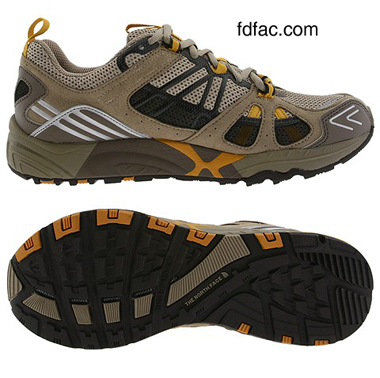
Hiking boots are notoriously wide and deep, which can be a huge challenge if you have a narrow foot. North Face Men’s Fire Road is one of the few hiking boots which are narrow and shallow. It’s also lightweight which is a plus, as Vasque hiking shoes, which are also narrow are a bit heavier. Comes in both men’s and women’s sizes.

northface_fireroad

Shoe Review – Adidas adiPURE TRX FG

AR came in today with her new soccer cleats – Adidas adiPure. AR has a wide foot, so she wears men’s soccer cleats, which is a great idea for women who have trouble finding wide enough women’s cleats.

In addition to being wide, the adiPure is made with extremely soft leather which helps with fit. The shoe also has a removable sock liner which can accommodate an orthotic if you need it. Even though the width looks narrow based on the outsole, inside there is a wide insole which provides a great foundation for your foot, especially if it’s wide.

This shoe can be found on Zappos.com in both men’s and women’s sizes. http://www.zappos.com/n/p/p/7419865/c/148832.html

Shoe Review – Mizuno Wave Rider 11

In general, Mizuno shoes have great uppers and not so great, soft compressible EVA midsoles or lowers. Because of this, they tend to wear out more quickly then other shoes having more firm medial (inner) EVA outsoles.

CF brought in her Mizuno Wave Wrider 11 shoes in today for evaluation after she started having heel pain while training in them for the Nike Women’s 1/2 Marathon. The shoes were less than 3 months old and barely had 150 miles on them, when the pain started. Fortunately she purchased a new pair for the event and although the pain did not go away, it did not get worse after the Marathon .

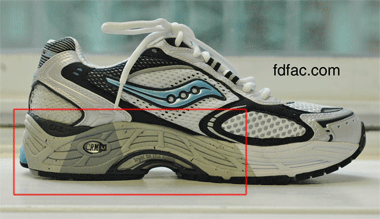
The above image shows her 3 month old shoe on the left and her new shoe on the right. Notice how the left shoe is listing to the outside (lateral)? This is because the white EVA midsole has compressed, which tilts the shoe, holding the foot in less than optimal alignment.
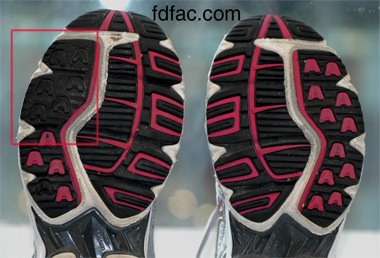
The image above shows asymmetric wear in the old shoe with the right shoe outsole being entirely worn off (no pink tread), making the outer forefoot less durable and more likely to pronate, resulting in heel pain or plantar fasciitis.

In this case, even a relatively new shoe can cause foot pain and problems while running. If you wear Mizuno’s, especially the Wave Rider 11, you will want to evaluate your shoes for signs of excessive wear at least monthly.

Shoe Review – Aquatalia Wasabi Boot & Whoopie3 Loafer

If you have a narrow foot then I don’t have to tell you how frustrating it can be trying to find a pair of boots that fit. If you’re looking for a stylish, waterproof boot, then Aquatalia’s Wasabi knee high boot is not only fashionable but narrow and shallow as well. It has a great rubberized sole to help with shock absorption and will get you through even the wettest days.

Aquatalia also makes a patent leather loafer on the same last, with the same low volume upper and narrow outsole – Whoopie3 which is shown below.

Aquatalia’s website is http://www.aquatalia.com/ Check it out for new styles!

Shoe Review – Brooks Addiction 7 vs. 8

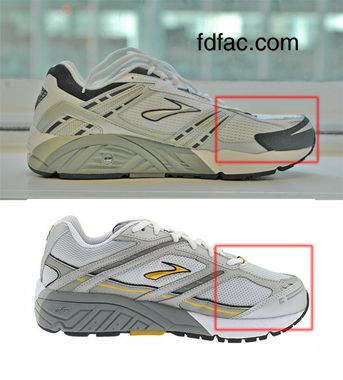
The Brooks Addiction is similar to the Beast in that it is wide, deep and very stable which is good for heavy pronators. Recently the Addiction 8 was released and it is a significantly different shoe than the Addiction 7.

Toebox Length and Depth – Substantially longer toebox in the Addiction 8 vs. the 7. This may be good or bad depending on whether your heel to ball or heel to toe measurement is longer https://drshoe.wordpress.com/2007/12/05/size-matters-heel-to-ball-vs-heel-to-toe/ The toebox depth in the Addiction 7 is much deeper than in the 8, or put differently, the 7 has more overall volume than the 8.

Width and Outsole Shape – The Addiction 8 is much narrower and has a much straighter last than the Addiction 7. If you have been successfully wearing the 7 you may need to go wider in the 8.

Overall, I’m pleased with the changes and much prefer version 8. It is more streamlined and proportional to the average foot than then 7. If however you have short toes, then you may want to try the Brooks Dyad, which has a shorter toebox than the newer Addiction 8.

For my review of Addiction 9 see the following post https://drshoe.wordpress.com/2010/08/03/shoe-review-brooks-addiction-8-vs-9/

Shoe of The Month – Circa Joan & David

SF brought in this fabulous shoe today. A cross between a gladiator sandal upper and the classic T-strap, make this shoe the one to beat for keeping your foot from sliding forward.

The outside strap is also adjustable ensuring snug fit at the ankle. Although you may not be able to find this exact shoe, these features can be found on many heels, and would be worth looking for.

Shoe Review – Nike Air Max Assail Trail

Finding a trail shoe for a narrow foot is not an easy task. The Nike Air Max Assail Trail fits the bill even though it’s listed as a D-Medium width and not narrow. An added plus is torsionally stability (no side-to-side twist) and an inflexible, thick, shock absorptive sole. This can help alleviate ball of the foot pain. It will also accommodate an orthotic which is great.

Shoe Review – Saucony ProGrid Hurricane 9 vs. 10

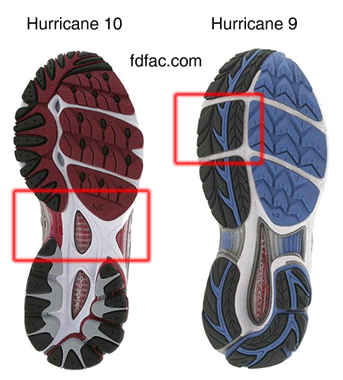
Here’s another example of a version change. As you can see below the Hurricane 10 is much shallower or as I prefer to describe it more fitted than the 9.

It’s also got a more proportional toe box, so if your heel to ball is sized 8 and your heel to toe is sized 8, your foot will fit nicely in this shoe. On the other hand if your heel to ball is an 8 and your heel to toe is a 7, you’ll do better in the Hurricane 9 as the Hurricane 10 may have too much toe box room.

Now let’s look at the width.

The Hurricane 10 is slightly more tapered on the inside which is good if you have a narrow foot. On the other hand, the Hurricane 9 is much boxier over the instep and arch, typically better for a wider foot.

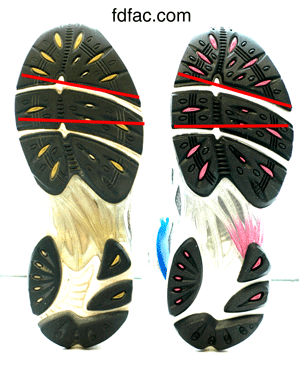
Also notice the flex grooves. The Hurricane 9 is going to be more flexible in the forefoot, due to the grooves going fully across the forefoot. The Hurricane 10 is going to be less flexible. What does this mean? If you get ball of the foot pain you’ll probably be better off with the 10.

Since the Hurricane 9 is on it’s way out, if this is a good fit for you, then the 10 probably won’t be. However, it you haven’t tried the 10, then this is a great shoe for a lower volume foot.

Women’s Asics 2130 – Updated Colors

Women’s Asics 2130 is one of my favorite shoes. It works for narrow and wide feet, which are shallow in depth. It’s not quite as narrow as the now discontinued 2120 but it does come in a 2A width which is great.

Recently (7/08), Asics released new colors of the 2130 which is good or bad depending on what you’re looking for. The new version is slightly narrower and a 1/2 size shorter, than the older models. The new colors can be found on Zappos.com, in Black/Platinum/Cherry and Storm/Lightening/Hot Pink, which is the shoe below.

If you’re wearing the old version and purchase one of the newer colors of this shoe, carefully compare it to your existing fit. You may need to go up in size or width to get the same fit.

Shoe Review – Adidas Terrex Low Hiking Shoe

Narrow, shallow hiking boots are usually difficult to find. The Adidas Terrex Low Hiker is a perfect match to this foot type. It is torsionally stable (doesn’t twist) and has an inflexible forefoot sole which you want, especially when hiking on irregular terrain.

Here is what the Adidas Terrex looks like from the top and side views.

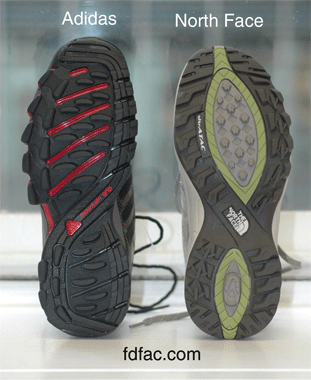
The following images compare the Adidas Terrex on the left with the wider North Face Furry, Gore-Tex, XCR on the right. Notice the difference between the outsole width. The Adidas is much narrower and shallower than the North Face.

The Adidas laces also extend closer to the toes, which provides more adjustability in the forefoot width than the North Face.

If you have a narrow foot and need a great lightweight low top hiker, then this shoe may just be for you.

Shoe Of The Month – Ash® Patent Leather Ribbon Lace

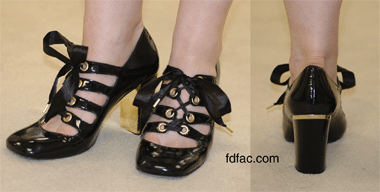
This is a beautiful and well designed shoe. Unfortunately, you won’t be able to find it anywhere online, as I just checked. It does however have some great features which are worthwhile to search for when buying a pair of high heels.

  1. The ribbon tie is adjustable accommodating different foot depths.
  2. The toe box is wide and rectangular which won’t pinch the toes.
  3. The heel comes straight down from the back of the shoe vs. offset, i.e. kitten style.
  4. The heel is 3″ which will work for most women.

The reason I don’t do many reviews on women’s shoes is because, whenever someone brings in a blog worthy pair, by the time they get to me the style has been discontinued. I therefore try and show you the design of shoes and what to look for.

Shoe Review – Saucony Progrid Omni 6 Ultimate

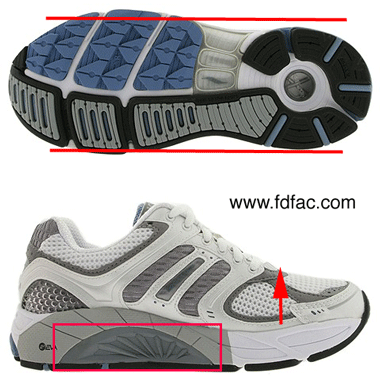
This shoe has a lot of mesh in the forefoot upper, which can help if you have hammertoes and /or bunions. The back of this shoe has a firm heel counter, which helps guide heel strike if you pronate excessively. This shoe also has firm EVA (ethyl vinyl acetate) in the midsole extending from the arch to the back of the shoe which makes it very stable.

A general rule of thumb is the darker (more grey) the outsole, the more firm or less flexible the shoe will be. This design feature helps those feet who need lots of support, especially at the rearfoot. The difference between the Ultimate and the Moderate version is the Ultimate has EVA which wraps around to the heel wheras the Moderate just has EVA in the instep.

The mens and womens version of this shoe come in medium and wide but not extra-wide and the toe-box is not too deep which can help fit considerably if your foot is wide and shallow.

Version 7 has just been released and from what I can see on Zappos.com, it looks to be essentially the same as version 6, but I’ll keep you posted if that changes. The other good news is, because version 6 is being upgraded, you can probably find this shoe on sale. At Sports Basement in San Francisco, this shoe is marked down from $100 to $64. Quite a deal for a well made shoe!

Shoe Review – Nike Air Pegasus Trail Shoe

D.M. came in today with his barely worn Nike Air Pegasus Trail shoes. He was recovering from a fractured sesamoid bone (small bone under the big toe joint) and wanted me to evaluate his shoes before he resumed running.

He had purchased the running shoes prior to his injury and spent over two hours in a specialty running shoe store, trying on every shoe in the store, because of his difficult to fit narrow foot. Finally, with the help of the sales staff, he found this Nike Air Pegasus Trail shoe. It was apparently rated highly by a runners magazine, which helped to close the sale.

The above image shows the shoe which on first glance appears moderately deep and wide, but I was keeping my fingers crossed, at least until I saw D.M. stand in the shoes.

Normally, the back area of the shoe (heel counter) should be perpendicular to the standing surface. As this image shows, the heels are turned out, which is not good for healing sesamoids, knees or alignment in general. No wonder he wasn’t getting better.

Moral of the story. Just because someone says shoe xy or z is the best shoe ever, make sure the shoe works for your foot and not someone elses. It could me the difference between healing and continued pain.

Shoe Review – Adidas 7406 Soccer Cleats

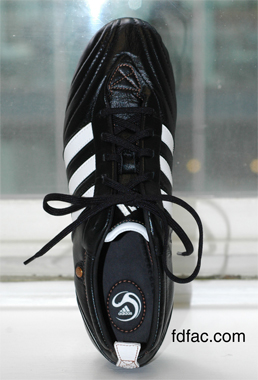
Finding a wide shoe for soccer is no simple task. Most soccer shoes fit painfully snug, so if your foot is outside of the bell shaped curve, trouble may loom ahead. I found this shoe for someone having serious ingrown nails, because of the narrow toebox fit. Luckily I found the Adidas 7406 which have a couple of great features and fit him perfectly.

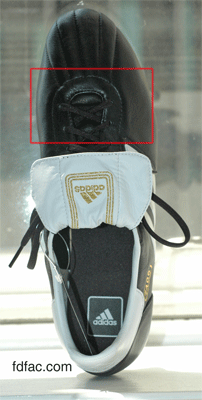
  • The eyelets extend beyond the ball of the foot, closer to the toes. This allows for width adjustability. Many soccer cleats don’t lace down this far and if your foot is wide, this can really help.

  • The arch width doesn’t hourglass in like most soccer cleats, given the arch full support as seen below.

And the overall width is slightly wider than most other soccer shoes and has a removable sock line which will accommodate an orthotic if you need one.

Shoe Review – Saucony Grid Stabil

Saucony Grid Stabil is one of my favorite shoes and I recommend it at least once a day for the narrow (rectangular) foot. Surprisingly it works for shallow (flat) and deep (high arched) feet, because it comes in both medium and wide widths. For a refresher on foot width determination, refer to my blog posting https://drshoe.wordpress.com/2008/01/14/narrow-vs-wide-feet/.

As for the construction, this is one of the few running shoes which is proportional, meaning the heel to ball and heel to toe measurements are true to size (https://drshoe.wordpress.com/2007/12/05/size-matters-heel-to-ball-vs-heel-to-toe/). It’s also deep enough to accommodate a sport orthotic once you remove the sock liner.

It has a non-collapsible heel counter which helps guide heel strike and it has a firm inside mid-sole (grey above) which helps with pronation or foot collapse. Lastly the toe box is shallow meaning it will pass the pinch test (https://drshoe.wordpress.com/2008/01/15/pinch-test-shoe-toebox/), providing a secure fit, if your foot is lower volume than most.

Shoe Review – Pikolinos Romana 8809

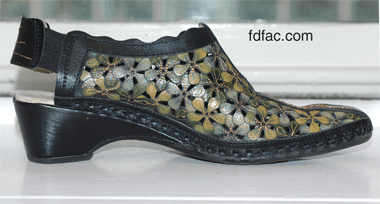
Pikolinos is a Spanish company which has been around since 1984. Because they are imported, their price is higher than a lot of US brands, but Pikolinos are well made using quality materials which helps.

Someone came in today having a bunion, wearing the above shoe. Notice how the flowers on the upper are actually cut-outs? This is a great design and many Pikolinos have similar styling. This open weave eases tightness over protruding bunions or hammertoes, making it a very foot friendly fit. The only problem with this particular style is it won’t fit a really wide foot. 

Other styles can be found at Pikolinos website http://www.pikolinos.com/

Shoe Review – Asics Gel Cumulus 10 vs. 9

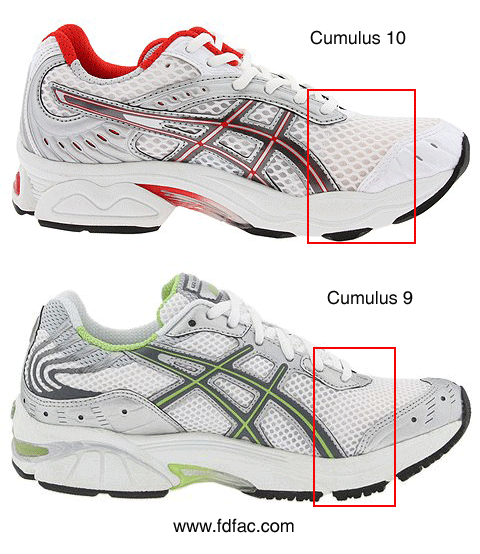
I wasn’t a fan of the Gel Cumulus 9 because of it’s flexibility and disproportional fit. I am a fan of the Gel Cumulus 10, especially if your foot is wide and you have a bunion. The Cumulus 10 has expanded the mesh in the area of the bump, which allows for less pressure in this area.

The cumulus 10 also has less flexibility in the forefoot than the 9 which can help alleviate ball of the foot pain.

The only downside of the Cumulus is the outsole, which is made of soft EVA which will tend to wear more quickly than a shoe with firm EVA. Both will accommodate a sport orthotic easily.

Shoe Review – Newton Running

A marathon runner came into the office asking about the new Newton Running shoes. He had seen their booth at his last Marathon event and wanted to try them, so he purchased a pair online and brought them in.

I was disappointed when I saw them, not only because of the expensive price tag ($150+) but because they were unstructured and flexible, reminding of Nike Free. Most discouraging of all though, was watching JR run in them on the treadmill. The upper was moving from side to side to the point that I was worried about rearfoot injury and the potential for knee pain with continued use.

Needless to say, he looked much better in his Saucony Grid Stabil’s which held him in proper alignment. If you are interested in running in a Newton, make sure you have a sports medicine specialist evaluate them on you including running.

Shoe Review – Asics 2130 New vs. Old Differences

Asics 2130 is one of my favorite shoes and I recommend it daily. Today however, someone brought in a pair of the new 2130’s in the storm/lightening/hot pink color. Her previous pair were the white/gold/python color and much to my dismay, the shoes were not the same width.

The new 2130’s (right) were 5mm narrower than the old 2130’s (left), which makes the fit more like the old 2120’s which have been discontinued.

If this is your running shoe, make sure you check the width as subtle changes can make a big difference. If the new 2130 seems too tight, switch to the D width which will probably work.

Shoe Review – MBT’s (Masai Barefoot Technology)

Reader Joey asks “I need professional, non-biased opinions on the MBT’s”.

I reviewed MBT’s, on my 12/22/07 posting. Here’s the link: https://drshoe.wordpress.com/2007/12/22/cnettv-me-on-masai-barefoot-technology/

As an additional summary, I’m not a huge fan of MBT’s because they are heavy and expensive and don’t work at all for narrow or shallow feet.

Research the company cites to validate their findings were done on healthy college students, having little or no pathology. Not surprisingly, there have only been three studies, all sponsored by the company and none within the past several years.

Typically when someone comes into the office wearing MBT’s, I work with them to transition out of the MBT’s into a more normal type of shoe and I have never recommended MBT’s as a first line of treatment.