Category Archives: Sport Specific Shoes

Everyday Athletes Are Champions

I am fortunate to have the best patients any physician could ever want. Everyday athletes doing extraordinary things. Critical to their accomplishments is the right diagnosis, the right treatment and the right shoes which Financial District Foot & Ankle Center prides itself on. These are but a few of the amazing athletes I have been privileged to treat during this past year. To them and to all of my other patients “Thank You”.

Shoe Review – Saucony ProGrid Guide 4

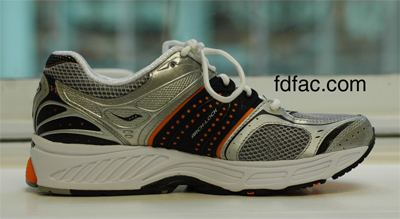
Saucony ProGrid Guide 4 is one of my favorite shoes. The upper has a generous amount of mesh which improves airflow, lightness and comfort. Mesh is also helpful if you have bunions or hammertoes.

The rearfoot midsole is thick providing maximum cushioning at heel strike and the firm medial EVA (grey) helps resist pronation and improves stability.

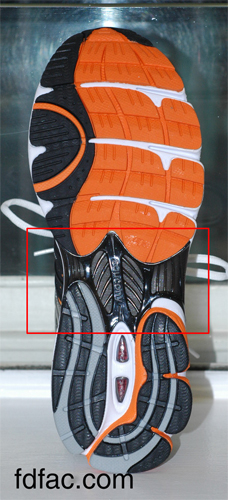
The width is not too narrow and not too wide. This image compares Asics 2160 to Saucony ProGrid Guide 4. Notice how the Guide 4 outsole is slightly wider in the forefoot than the 2160? This is a great feature as most feet are slightly wider in the forefoot than rearfoot.

All in all, Saucony ProGrid Guide 4 is a great shoe and I also like the new bright colors.

Shoe Review – ProGrid Stabil CS vs. ProGrid Stabil CS 2

When Saucony changed the Grid Stabil design to ProGrid Stabil CS, I was underwhelmed as the ProGrid Stabil CS whas not nearly as stable or supportive as the the Grid Stabil https://drshoe.wordpress.com/2009/02/04/shoe-review-saucony-grid-stabil-vs-progrid-stabil/. Fortunately, the ProGrid Stabil CS 2 has reinstated the features I was so fond of with the earlier Grid Stabil. These include:

A less deep toebox for better fit, while still retaining ample upper width for toes or orthotics if necessary.

The ProGrid Stabil 2 midsole is thicker and firmer than the prior version which makes for a much more structured, stable shoe.

The most important change with ProGrid Stabil CS 2 is a firmer, more durable outsole. The prior version’s outsole was thinner and softer, causing the shoe to wear out more quickly than it should. It was also not not very effective at pronation control whereas the CS 2 is.

If you’re a runner with a wide foot looking for lightweight support, then Grid Stabil CS might just be for you.

Shoe Review – Nike Air Structure Triax 12 vs 13

I’ve been a fan of Nike Air Structure Triax for quite sometime, however there are some changes with version 13 that you should be aware of if you’re upgrading from version 12.

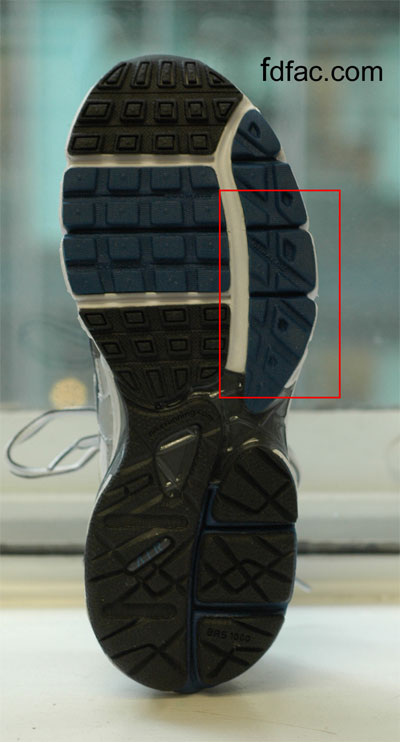
First and foremost the Triax 13 is almost a full size shorter, heel-to-ball, than the Triax 12 https://drshoe.wordpress.com/2007/12/05/size-matters-heel-to-ball-vs-heel-to-toe/.This can cause conditions like plantar fasciitis (arch pain) or metatarsalgia (ball of the foot pain) so make sure to check the size before you buy.

Lack of firm EVA caps (blue highlighted areas) on the Triax 13 waffle sole also means less durability than the Triax 12. This means you may not get as much mileage as you would in the 12. If you owm the Triax 13 you will want to check outsole wear sooner than with the Triax 12.

Pluses about Nike’s Air Structure Triax 13 include a firm heel counter and firm EVA in the medial midsole. These features continue to make the Triax one of Nike’s most stable, supportive shoes.

Shoe Review – Nike Zoom Kobe VI Basketball

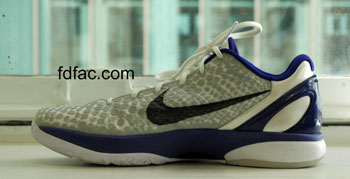
Basketball shoes can be a challenge because they typically don’t come in widths other than medium and tend to run wide, making it all but impossible to fit a narrow foot. Nike Zoom Kobe VI is an unexpected exception. In addition to a narrower last than most basketball shoes, it’s also extremely stable.

Another plus is the insole waist of the Kobe VI doesn’t hourglass providing a more supportive foundation for a pronated foot.

With an inflexible forefoot sole, torsional stability and a firm heel counter, this court shoe rivals some of the most stable running shoes available, which truly is an exception to the rule.

My only minor reservation with this shoe is that it’s a mid-top style and not a “true” high-top which may exacerbate ankle instability. This is easily remedied however, by wearing an ankle brace during play. If you remove the sock liner, there will be more than enough room to accommodate any additional tightness an ankle brace or custom orthotic might cause.

Miles Austin III – Get Some Better Fitting Nike’s

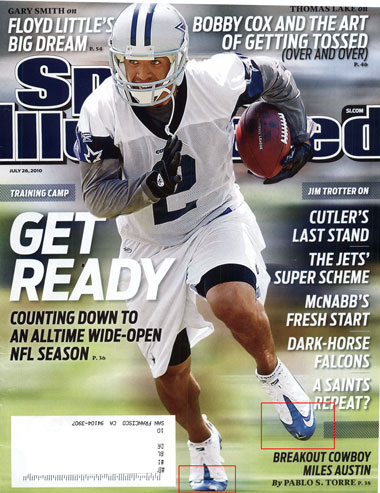
I was shocked last week when the July 26, 2010 Issue of Sports Illustrated arrived in my office. There on the cover is Dallas Cowboy wide receiver Miles Austin III, running down the field with holes in his Nike sponsored cleats where his big toes should be. Yikes…one of the faster ways to derail athletic talent is to wear shoes that don’t fit properly which is happening here.

Without seeing how the cleats fit when he is standing still it is difficult to determine whether there is too much volume and he’s sliding forward or whether the toe box is simply too short. One thing however is certain, having your toes exposed and unprotected is not a good thing, especially in a field sport. I think Mr. Austin’s trainers should give me a call.

Climbing Shoes

OD came in today with her climbing shoes. If you’re a rock climber then you already know how painfully short and tight these shoes are. Discussing the rationale behind this or the lack of a single scientific studies supporting this will be tabled to another blog posting on another day.

For now, I am going to return to the basics and remind you that a square peg is not designed to go into a round hole, especially if you have a bunion (wide forefoot) which OD has.

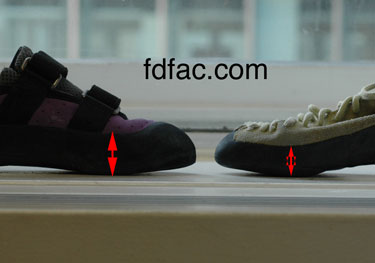
She has been wearing the Mad Rock shoes on the right for the past few years. Because they are starting to wear out, she purchased a new pair of Evolv shoes shown below on the left.
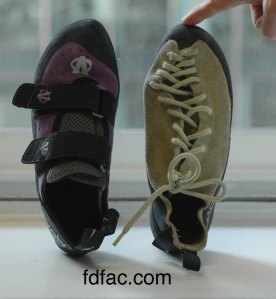
As you can see from the above image, these two shoes are not designed the same. The Evolv on the left is much narrower than the Mad Rock on the right, and the widest part of the shoe (forefoot) is not adjustable because it has straps instead of laces that don’t go as far down to the toes.

If you have a wide forefoot then you want the shoe to be adjustable at the widest point. Although laces are less popular than straps, this is a must-have design for a wide foot.

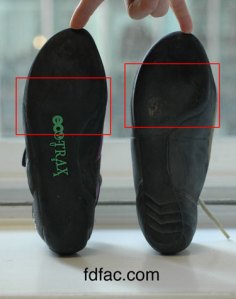
If you’re comparing two laced styles, check the width by turning the shoe over and comparing the width of the forefoot between the pairs. Again, in comparing the images below, with the Evolv on the left to the Mad Rock on the right, it’s easy to see independent of the upper, that the Mad Rock has a wider forefoot sole.
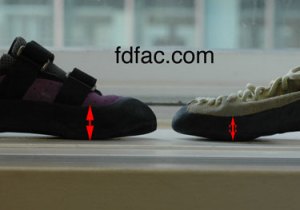
Now if you look at the side profile of both shoes, the rubber on the left Evolv comes up much higher on the foot, whereas the Mad Rock’s rubber is lower to the ground. This reduces forefoot compression, another plus for a wide forefoot
Finally, if you need even more forefoot room, you can always modify the lacing on your climbing shoes. This image shows what we did with OD’s shoes. Both feet are the same width, but the Evolv shoe on the left is essentially acting like a vice grip. You will not experience a loss of gripping ability with the modified lacing on the left, but an enormous improvement in overall comfort and fit.


Shoe Review – Nike Zoom Nucleus MC+

Nike is not generally known for width or durability. Zoom Nucleus MC+ however, gets an A in both of these categories. Although Zoom Nucleus MC+ only comes in a medium width it runs wide and is comparable to many other shoes that do come in wide widths (New Balance, Asics, Saucony). I also like that it flares on the outside forefoot of the outsole, which is something that many running shoes don’t have and need.

The upper of this shoe also has a generous amount of mesh in the places you need it most if you have bunions or hammertoes.

Finally, this shoe is extremely stable with not only firm medial EVA but a non-collapsible heel counter. These two features really help prevent excessive pronation and give Brooks Beast and Asics Gel Evolution a run for their money in the motion control department.

If you didn’t think you would ever be able to find a Nike+ shoe in a wider last with  more stability, then your answer may have arrived. Nike Zoom Nucleus MC+ is a great shoe.

Shoe Review – Zoot M Ultra Temp+ 2.0

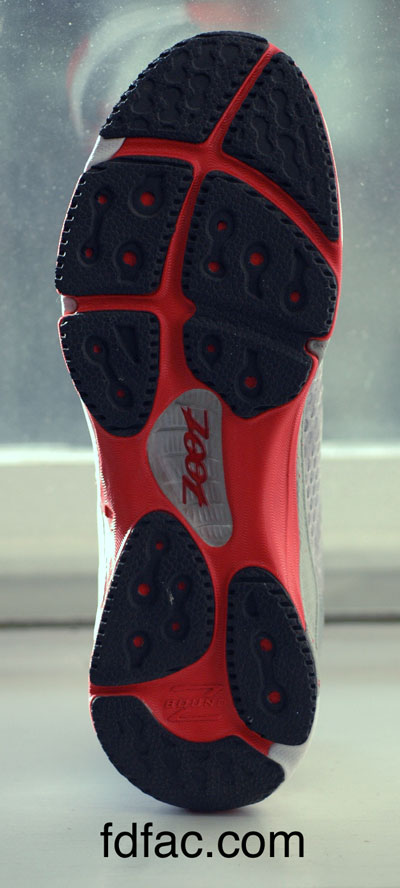
JM was trying to find better fitting racing flats (training) and was recommended Zoot Footwear by a Road Runner Sports brick and mortar store.  According to the Zoot website, their footwear is designed by and for triathletes to be easy-on, easy-drying and easy-off. As a racing flat however, I was underwhelmed.

Although lightweight and definitely breathable, this particular model’s upper seems to overpower the outsole resulting in a sloppy fit hovering over an unstable base. A semi-curved last and an extremely narrow outsole don’t help either and at least for SK who has a wide foot, this shoe would be disastrous with any mileage at all, triathlon or track run.

And to add insult to injury, the quick-pull lacing systems cinch plate came apart after just one use requiring us to tie the elastic lace in a knot to keep the shoe on.

In the end, we went with Asics Gel-Speedstar 3 which I also reviewed https://drshoe.wordpress.com/2010/02/01/shoe-review-asics-gel-speedstar-3/.

Shoe Review – Asics Gel-Speedstar 3

Finding a running shoe that works as a racing flat is not easy. Finding a racing flat that fits a wide foot is nearly impossible. Fortunately, Asics Gel-Speedstar 3 qualifies.

Although it looks like it should be narrow, the mesh upper has extra depth which makes this a great match for a wide foot.

Even thought the midsole looks thick, it’s made of soft EVA which is lightweight, providing shock absorption. All this in a mere 9 ounces.

What a great shoe!

Snowboard Boots – Heel Slippage

Snowboard boots are notorious for not holding the heel down which is essential for a good fit in any shoe. What most people don’t realize is that the snowboard boot liner needs to fit snugly to secure proper fit. Unfortunately most snowboard boot liners fail in this area of design.

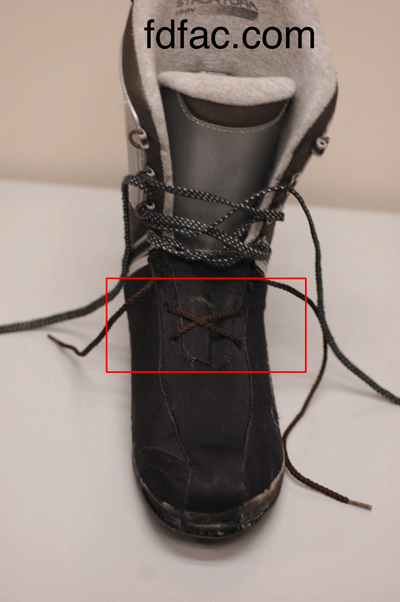
Typical liner fastening utilizes either the traditional lace system or faster quick pull systems. Unfortunately, these systems don’t go far enough toward the toes to secure proper fit. Without a snug fit over the top of your foot and not just the ankle, your heel will slip out affecting comfort and performance.

If you have a heel slippage problem, rather than buying a new (expensive) pair of boots, give this modification a try. Have your local shoe repair shop add additional eyelets over the foot part of the liner and lace an additional pair of laces through. This will cinch down the foot part of the liner securing your heel in the boot.

This modification also works for ski boot liners.

Shoe Review Gel-Kayano 16 vs. 15

I was very disappointed when Gel-Kayano 15 debuted. I was a fan of prior versions, but not the 15 and I blogged about the reasons why  https://drshoe.wordpress.com/2009/01/15/shoe-review-gel-kayano-15-vs-14/. The main difference was the 15 was deeper than the 14 and the 15 was much more unstable laterally. These trends haven’t changed with Gel-Kayano 16.

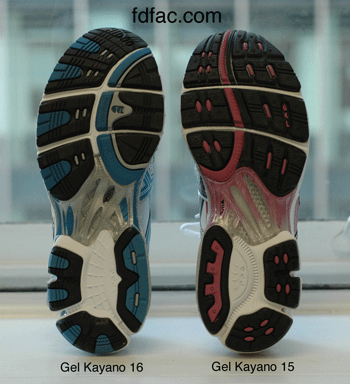
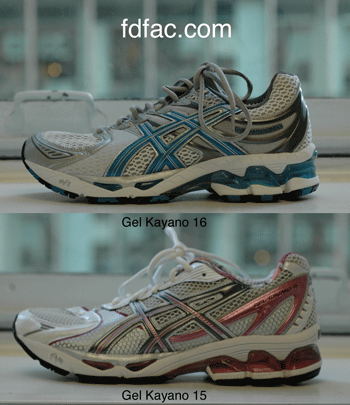
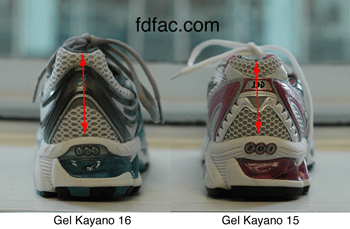
Overall, Gel-Kayano 16 is not a big departure from the 15 with the exception that it  is even deeper. The medial midsole of the 15 and 16 are nearly identical as shown below. The outsole is exactly the same.

Gel-Kayano 16 has a similar midsole to the Gel Kayano 15 with more gel and less EVA in the lateral (outside) midsole. This design may make your heel strike more wobbly causing things like ankle sprains or tendonitis. Everyone doesn’t necessarily need firm lateral EVA but if you do, you would be better off with the 2150 than the Gel Kayano 15. This modification is a huge departure from versions 14 and prior.

Asics has continued with the asymmetrical lacing, however this version design is better than the the 15. I’m still not a fan of asymmetrical lacing, but at least this one won’t bunch up causing irritation like the 15 did. The lack of trim over the big toe, also means less potential irritation along the top of the big toe.

The one plus is Gel-Kayano 16 has a higher heel counter int he back which will reduce heel slippage if that’s been a problem for you.

Overall, Gel-Kayano 16 is too much like Gel-Kayano 15 and not enough like Gel-Kayano 14 and prior versions for me to recommend.

Shoe Review – Saucony Progrid Omni 8

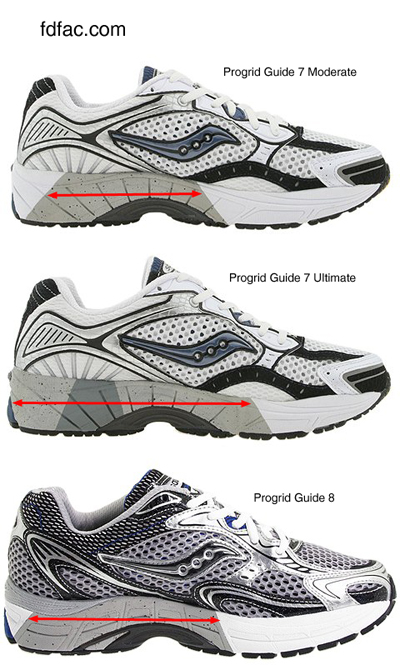
Progrid Omni 8 is a departure from the 7 version in that the 7 had both moderate and ultimate styles depending on how much stability you wanted. The Progrid Omni 8 is closer to the 7 moderate version in medial EVA firmness as shown below.

Progrid_Omni_7_v_8_Medial

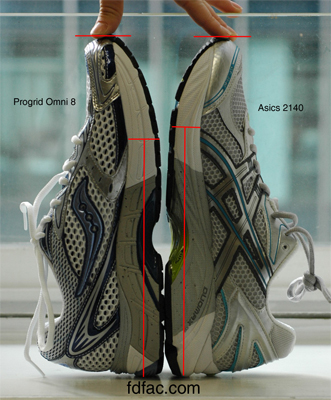
The other big difference is sizing. Progrid Omni 8 runs 1/2 size shorter than Progrid Omni 7. Therefore, if you’re used to wearing a size  10 in the Omni 7 then you will want to size up to a 10 1/2 in the Omni 8.  Below is a comparison length between Progrid Omni 8 W and Asics GT-2140, both in women’s size 8. The 2140 is true to size whereas the Omni 8 is not.

Progrid_Omni_8_v_2140

Shoe Review – Brooks Adrenaline GTS 10

Thank goodness, Brooks has debuted Adrenaline 10. I count  on Adrenaline to fit the most narrow foot, which is why the Adrenaline 9 was such a disappointment. Prior versions were perfect, but version 9 had changed so much from prior versions that it would no longer fit the narrow foot properly. Here’s my post about it.https://drshoe.wordpress.com/2009/02/04/shoe-review-brooks-adrenaline-gts-8-vs-gts-9/.

Now however, I am happy to report that Adrenaline 10 rises to the level of fit for the narrow foot that all versions prior to 9 had. What a relief. This is a classic case of “if it ain’t broke, don’t fix it” and Brooks has been restored to their rightful first place in helping runners with narrow feet find a perfectly fitting running shoe.

As an added bonus, the overall look is much more stylish and sleek making this shoe even nicer. Thanks Brooks and thanks JY for bringing these shoes in for me to evaluate.

Adrenaline_10

Shoe Review – Saucony Hurricane 11

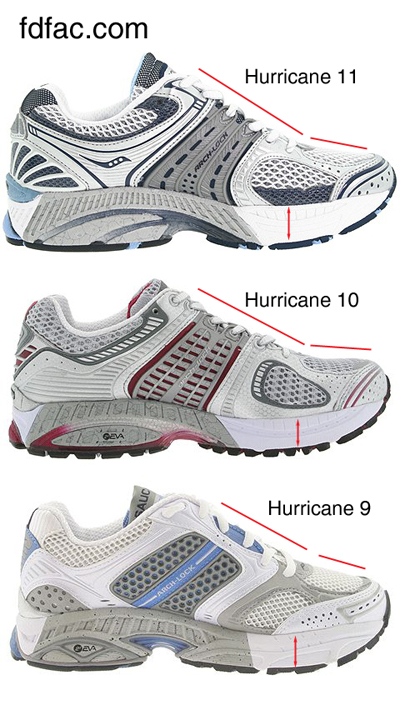
I have previously reviewed the Saucony Hurricane 9 and 10 https://drshoe.wordpress.com/2008/08/12/shoe-review-saucony-progrid-hurricane-9-vs-10/ and Saucony has now released version 11. Overall I like the changes to the 11, but this model has even less volume than the 10, which may be a problem if you’ve been wearing this shoe for it’s roominess.

One of the changes I especially like though  is a thicker forefoot midsole which is great for added cushioning at toe-off as seen below.

Hurricane_2009_Medial

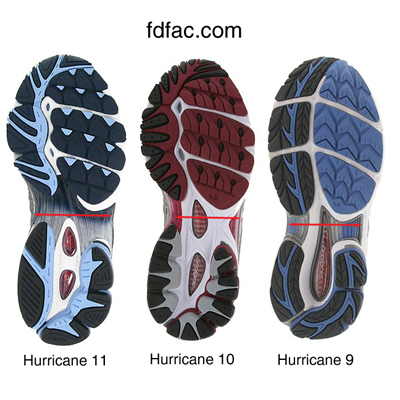
The waist of the 11 is also wider than the 10 providing much better midfoot support and help with pronation.

Hurricdane_2009_Plantar

My only problem with this shoe is how expensive it’s become ($139). Each new version is $10 more than the prior. At this price point the shoe is OK but better designed and less expensive, similar shoes include Adrenaline GTS 9 or Asics 2140. I even prefer Saucony Guide Shoe to this shoe in terms of overall design and fit.

Shoe Review – Asics Gel Frantic 4

This is the 1st time I have seen this  shoe and I am underwhelmed.

Gel_Frantic_5

One of the things I like most about many Asics running shoes  is that they are generally well structured and stable which makes them a perfect choice for many runners. The Gel Frantic on the other hand is anything but. It strikes me as a Nike Shox wannabee in design without any of the rigidity associated with many of the Shox shoes. This shoe rolls up like a ball with very little effort and anyone who pronates at all would be ill-served by this flexible shoe.
Frantic_Torsional_Instabili

In summary, I would probably never recommend this shoe for a serious runner, especially one  having foot, knee or iliotibial band pain.

Shoe Review – Saucony Progrid Echelon

If you are a runner who doesn’t pronate too much and need maximum cushioning or shock absorption then Saucony Progrid Echelon may be the shoe for you.

It’s upper is similar in design to the Progrid Stabil 6 https://drshoe.wordpress.com/2009/02/04/shoe-review-saucony-grid-stabil-vs-progrid-stabil/ without the firm EVA medial midsole. It’s mesh cutouts also help if you have bunions or hammertoes.

Echelon_Side

The outsole doesn’t hourglass much which is helpful if you have a wide or high arched foot or just need extra width to keep from spilling over in this area.

Echelon_bottom_2

Shoe Review – Asics Gel Nimbus 11

Reader Ken asks “I read in one of your reviews that you don’t like the Nimbus 1o from Asics. This shoe was recommended to me as a neutral runner with high arches and problems with shin splints and IT band soreness. Can you elaborate on your problems with the Nimbus 10.

The Gel Nimbus is a very popular Asics shoe and I must admit I am much happier with Gel Nimbus 11 than I was with Gel Nimbus 10 or 9. In fact, the 11 is a great shoe for a neutral runner with high arches, shin splints and IT band soreness. As long as you don’t pronate too much you should be just fine.

Here are some of the major differences between the three versions.

  • Upper (top) -Differences between the uppers may mean the difference between crowding of the toes, puckering or perfect toe box room. As many of you know, I prefer regular lacing to asymmetrical lacing with the 11’s asymmetrical version (Asics is listening) being preferred to the 10. I am also pleased that the 11 toe box has full mesh like the 9 and not with trim over the big toe which can cause tendon or toe friction if prominent.

Nimbus_9-10-11a

  • Outsole – Fortunately, the Nimbus 10 and 11 have a much improved outsole with a wider waist. The outsole is overall wider in the forefoot than it was in version 9 also providing more support. The sizing comes in a full range from Women’s narrow (2A) to Men’s extra wide (4E).

Nimbus_9-10-11Bottom

  • Midsole (medial) – This is the biggest change and most welcome improvement to the Nimbus 11 from both prior versions. Previously the Nimbus had much less EVA in the midsole directly in the center of the arch. This made the shoe flex more in the arch than it should as well as it made the shoe much less durable and more soft. Now however, the midsole is full EVA providing extra stability as well as cushioning, which I really like.
  • Trim over the big toe joint – The only downside with the 11 is trim overlying where a bunion would be. If you have a bunion then the 10 would have been a better design for you or you can try skipping the 1st set of eyelets entirely which may help.

Gel_Nimbus_9-10-11Side

All in all, if you have previously avoided wearing Asics Gel Nimbus – now is the time to give the 11 a try. It has a much more biomechanical design and I really like the improvements Asics has made to this light weight shoe cushioned running shoe.

Roller Derby – Outside of the Foot Swelling (bursae)

Lusty Malice (http://www.bayareaderbygirls.com/) came in today with increasing outside of the foot pain. She purchased new boots in January which alleviated her ankle pain but created outside of the foot pain and swelling otherwise known as a bursae. A bursae is a fluid-filled sac which develops in areas of  pressure. In this case, a wide forefoot and a tight new boot, caused pressure and friction resulting in bursae formation.

derby_bursae_5th

Fortunately, since this is a new problem, the solution is easy. First the skate needs to be spot stretched. I use a ball and ring stretcher for just such cases. You can also go to your local shoe repair store and have them do this as well. Be sure to tell them that it needs to be spot stretched as opposed to forefoot stretched, otherwise you won’t get the desired result.

ball_ring_derby_girl

Next, I showed LM how to re-lace her skates skipping the eyelets that correspond to the bursae location which will reduce pressure in this area.

skip_eyelet_derby

Finally, if there is still some residual pain and swelling then a quick trip to the podiatrist for a cortisone injection into the burse should take care of things once and for all.

Breast Cancer 3-Day Shoe Review – New Balance 1123

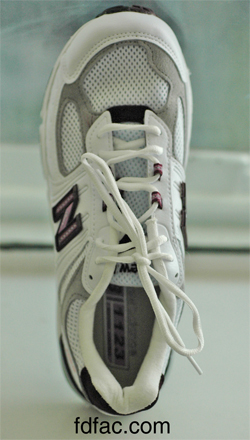
Having completed the first Avon Breast Cancer 3-Day walk (1998),  I know all too well how grueling the training and walk itself can be. I am therefore always pleased when I can recommend a shoe which withstands the demands and rigors this event requires. New Balance 1123 is a running shoe which provides maximum support, stability and it even has pink trim!

nb_1123_top

This shoe is a tank and it works for wide and deep feet. It also has mesh on the inside which works if you have a bunion. It has medial and lateral midsole EVA and no hourglass in the waist which especially helps if you pronate.  Bottom line, this is a really terrific shoe but pricey, so make sure you use your 3-Day discount card when purchasing.

nb_1123

Here is my other New Balance 1123 Post https://drshoe.wordpress.com/2009/11/11/shoe-review-new-balance-1123-excessive-forefoot-wear/